

Choosing the right web hosting provider is the most critical decision you will make for your online business or blog. A single mistake here can lead to a slow website, frequent downtime, poor SEO rankings, and lost revenue. Among the hundreds of hosting providers available on the internet, one name consistently dominates the market: Bluehost.
With over 2 million websites powered worldwide, Bluehost has been a market leader for over two decades. More importantly, it is one of the very few web hosts explicitly recommended by WordPress.org since 2005.
But does Bluehost still hold up to its reputation in 2026? With fierce competition from cheaper alternatives and premium cloud hosting providers, is Bluehost worth your money?
In this comprehensive, unbiased, and step-by-step Bluehost review, we will dissect their performance, features, pricing structures, customer support, and ease of use. By the end of this guide, you will know exactly whether Bluehost is the right choice for your specific needs.
Why Your Web Hosting Choice Impacts Your Affiliate Business
Before diving into the technical aspects of Bluehost, it is vital to understand why high-quality hosting matters for affiliate marketers, bloggers, and web developers.
When you write blog posts to promote affiliate products, your primary traffic source is Google Search (SEO). Google uses page speed and user experience (Core Web Vitals) as critical ranking factors. If your host takes more than 3 seconds to load your page, up to 40% of your visitors will bounce back to the search results.
Furthermore, if your website goes down during a peak traffic hour, you lose potential affiliate clicks and sales commissions. Premium, reliable hosting acts as the foundational engine of your entire digital marketing strategy. Let’s see how Bluehost performs as that engine.
Bluehost Key Features: Inside Our Bluehost Review

Bluehost offers a robust set of features designed to make website management seamless for both absolute beginners and seasoned professional developers. Below is an in-depth breakdown of their core infrastructure features.
1. One-Click WordPress Installation
Setting up a website manually can be incredibly intimidating. You have to create a database, download the WordPress core files, upload them via FTP, and connect the configuration files. Bluehost completely eliminates this technical barrier.
Through their modern customized dashboard, they offer a seamless 1-Click WordPress Installation wizard. The system automatically creates the database, configures the security settings, and installs the latest stable version of WordPress in under 60 seconds.
2. Free Domain Name and SSL Certificate
Starting a new website usually comes with hidden upfront costs. You have to buy a domain name (usually costing around $12–$15 per year) and purchase an SSL certificate to secure your user data.
Bluehost makes starting incredibly budget-friendly by offering a Free Domain Name for the first year with all their hosting plans. Additionally, they provide a Free Let’s Encrypt SSL Certificate that automatically installs on your domain, giving your site the secure https:// protocol and the padlock icon essential for consumer trust and SEO.
3. Built-In Caching and Performance Tools
Website speed depends heavily on how data is cached. Instead of forcing users to figure out complex third-party caching plugins, Bluehost includes a proprietary server-level caching system directly inside their control panel.
With multiple tiers of caching configuration (Basic, Assets, and Premium), you can optimize how your pages load with a single toggle button. Bluehost also integrates seamlessly with global Content Delivery Networks (CDNs) like Cloudflare, ensuring your global visitors experience ultra-low latency.
Robust Security Protocols
In today’s digital landscape, security cannot be an afterthought. Cyber threats, brute-force attacks, and malware injections are constantly rising. Bluehost protects your digital assets using multi-layered security protocols:
- Resource Protection: Keeps your site performance stable even if other users on the same shared server experience sudden traffic spikes.
- IP Blacklist: Automatically blocks malicious IP addresses attempting to brute-force your login screens.
- Automated Daily Backups: Powered by Jetpack or CodeGuard (depending on the plan), ensuring you can restore your website with a single click if something goes wrong during a plugin or theme update.
Bluehost Hosting Plans and Detailed Pricing Analysis
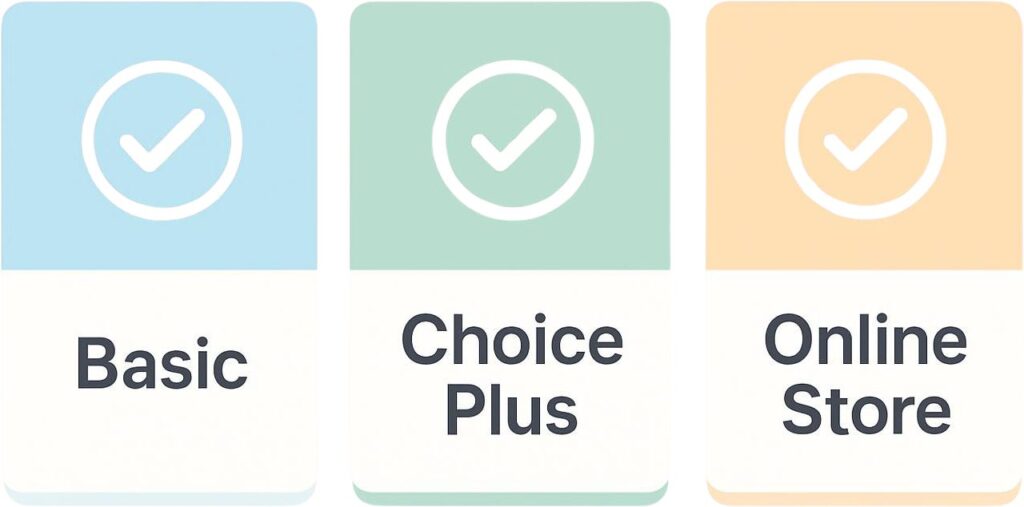
Bluehost offers several hosting tiers tailored to different stages of business growth. Understanding what each plan offers ensures you don’t overpay for resources you don’t need or bottleneck your site with insufficient infrastructure.
Shared hosting is the most popular choice for individuals starting their first blog or small business website. On a shared server, multiple websites share the resources of a single physical server, keeping costs incredibly low.
- Basic Plan: Ideal for hosting a single website. It includes 10 GB of SSD storage, a free domain, a free SSL, and standard performance support.
- Choice Plus Plan: This is the most highly recommended plan for affiliate marketers. It allows you to host 3 websites, offers 40 GB of blazing-fast NVMe SSD storage, includes free automated daily backups for the first year, and free domain privacy protection.
- Online Store Plan: Specifically optimized for e-commerce websites running WooCommerce. It comes with pre-installed payment gateway plugins, premium store themes, and advanced security configurations.
VPS and Dedicated Hosting: Scaling for High Traffic
As your affiliate business grows and starts attracting hundreds of thousands of monthly visitors, shared hosting may become too restrictive.
- VPS (Virtual Private Server) Hosting: Provides dedicated virtual slices of a server with isolated RAM and CPU resources. It is ideal for developers who need root server access and medium-scale traffic management.
- Dedicated Hosting: The ultimate powerhouse tier where you rent an entire physical server exclusively for your website. This ensures maximum speed, complete configuration freedom, and the ability to handle millions of impressions simultaneously.
Step-by-Step Guide: How to Buy Bluehost Hosting and Set Up WordPress

To help you get your business up and running smoothly, here is an exact, step-by-step walkthrough in this Bluehost Review to navigate the purchase process and launch your professional WordPress site
Step 1: Visit the Official Website
Open your browser and navigate to the official Bluehost homepage. Click on the prominent green “Get Started” button. This will take you directly to the hosting selection screen where their current promotional discounts are applied.
Step 2: Choose Your Hosting Plan
Review the plan tiers discussed above. If you are starting out but intend to build a scalable affiliate network with multiple review blogs, select the Choice Plus Plan by clicking “Select”. This plan offers the best balance of price, multi-site capacity, and automatic backup features.
Step 3: Register Your Free Domain Name
The system will now prompt you to set up your domain:
- Create a new domain: Type in your desired business name (e.g.,
yournichehub.com) and choose your extension (we highly recommend sticking to.comfor global credibility). - Use a domain you own: If you previously bought your domain from an external registrar like GoDaddy or Namecheap, type it into the secondary box. You will connect it to your hosting later via nameservers.
Step 4: Fill in Your Account Details
On the checkout screen, enter your personal details… As highlighted in this Bluehost Review, ensure your email is correct, as Bluehost will send your account credentials, invoice receipt, and server verification details to this specific address.
Step 5: Review Package Extras and Complete Payment
Scroll down to the “Package Extras” section. Bluehost will have a few add-ons checked by default. Review them carefully:
- Turn off any extras you don’t need (like SiteLock Security or Yoast Premium) to save immediate upfront costs.
- Keep Domain Privacy Protection checked if you want to prevent spammers from seeing your personal phone number and home address on the public WHOIS registry.
- Choose your account account duration (12-month or 36-month terms). Long-term plans offer significantly higher discount percentages.
- Enter your credit card or PayPal details, agree to the Terms of Service, and click “Submit”.
Step 6: Launch Your Automated WordPress Dashboard
Once the payment is successful, you will be prompted to create a master account password. Log in to your brand-new Bluehost hPanel control center. The setup wizard will ask you a few simple questions about your site type (Blog, Business, Portfolio, or Online Store).
Once completed, click the “Log in to WordPress” button. The system will bypass any manual setup logins and drop you straight into your clean, fully operational WordPress Admin dashboard.
Bluehost Pros and Cons: A Balanced Perspective

To maintain absolute transparency in this review, we must weigh both the strengths and weaknesses of using Bluehost for your web operations.
The Pros (Advantages)
- WordPress.org Recommendation: Being officially backed by the core WordPress team means their server configurations are natively optimized for the CMS architecture.
- Outstanding Uptime Performance: Testing consistently proves an average uptime rating of 99.96%, ensuring your site stays accessible around the clock.
- Highly Intuitive Dashboard: Their customized control panel bridges the gap between complex server environments and absolute beginners perfectly.
- Unmetered Bandwidth: They do not charge you extra penalty fees if your content goes viral and consumes immense amounts of data traffic.
- Risk-Free 30-Day Money-Back Guarantee: If you are unsatisfied with their performance or service within your first month, you can request a full refund on your hosting fees.
The Cons (Disadvantages)
- Higher Renewal Rates: Like almost all premium hosting providers in the industry, their initial promotional rates are incredibly cheap, but the plans renew at standard, higher pricing tiers after your first billing cycle ends.
- No Monthly Billing Option: You must buy a minimum of 12 months upfront to get access to hosting services; there are no month-to-month payment frequencies available for shared plans.
Bluehost vs. Hostinger: How Do They Compare?
If you are evaluating options in the market, your two main choices will likely boil down to Bluehost and Hostinger. Both are excellent choices, but they cater to slightly different philosophies.
- Pricing: Hostinger generally edges out Bluehost with slightly cheaper entry-level monthly pricing, making it attractive for developers working on tight shoe-string budgets.
- Dashboard Style: Hostinger utilizes their proprietary hPanel, which leans heavily into modern minimalism. Bluehost focuses on a tailored WordPress onboarding experience, guiding you systematically through the exact steps needed to launch a blog, configure menus, and build pages.
- Support System: Both companies offer 24/7 support. However, Bluehost provides direct phone support channels alongside live chat options, which is a massive relief for non-technical users who want to talk to an agent immediately to solve critical bugs.
Final Verdict: Is Bluehost Worth It in 2026?

Ultimately, our final verdict in this Bluehost Review confirms it remains an absolute powerhouse and an industry gold standard for building professional WordPress websites Their seamless onboarding process, robust security features, server-side performance architecture, and official endorsement from WordPress make them an incredibly reliable home for your digital business.
If you are a beginner looking to build an affiliate blog, a developer managing client websites, or an entrepreneur launching an e-commerce hub, this Bluehost Review provides the perfect balance of ease, power, and credibility.
Who Should Choose Bluehost?
- Absolute beginners who want a stress-free, automated WordPress setup.
- Affiliate marketers who need rock-solid uptime and native security shielding.
- Bloggers who prioritize having access to 24/7 phone and live chat support lines.
Who Should Look Elsewhere?
- Advanced developers looking for ultra-cheap, unmanaged cloud environments without user onboarding interfaces.
“Ready to start your digital journey after reading our comprehensive Bluehost Review? Head over to the official Bluehost page, claim your free domain name, and launch your business today!”
Frequently Asked Questions (FAQs)
Q1. Is Bluehost good for WordPress beginners?
Yes, absolutely. Bluehost features an automated, one-click WordPress installation process that makes it incredibly simple for anyone to start a blog without needing any technical or coding knowledge.
Q2. Can I get a free domain name with Bluehost?
Yes, Bluehost offers a free domain name registration for the first year with almost all of their shared hosting plans, which is a great upfront cost-saving benefit for new marketers.
Q3. Does Bluehost offer monthly payment plans?
Generally, no. For the shared hosting plans analyzed in this comprehensive Bluehost Review, you need to purchase a minimum of a 12-month upfront term to get access to their services.
Q4. What are the alternative hosting options to Bluehost?
If you want to look at alternatives, Hostinger is a popular budget option. For premium cloud needs, architectures like WP Engine can be considered depending on your project scale.
Q5. Is Bluehost’s customer support helpful?
Yes, they offer 24/7 technical support via both live chat and phone lines. Our tests and various platform insights confirm that their team responds quickly to help resolve critical site errors.