

If you want to scale your digital brand or agency in 2026, you must understand how to automate business processes to maintain high profit margins. In today’s highly competitive digital landscape, scaling data operations or client workflows manually is no longer sustainable. Whether you are running a high-growth e-commerce storefront, managing a modern marketing hub, or supervising backend operations for an enterprise, structural inefficiencies can cost you both time and revenue.
Modern workflow efficiency requires structural automation. Leveraging high-performance business automation software allows modern brands to build scalable, self-sustaining ecosystems that run seamlessly 24/7. By transitioning from fragile manual data operations over to structured cloud orchestration, organizations can minimize clerical errors, accelerate client delivery timelines, and substantially reduce operational overhead costs. This ultimate architectural guide explores how to optimize your system workflows and transform everyday manual tasks into a fully automated digital asset.
What is Process Workflow Automation?
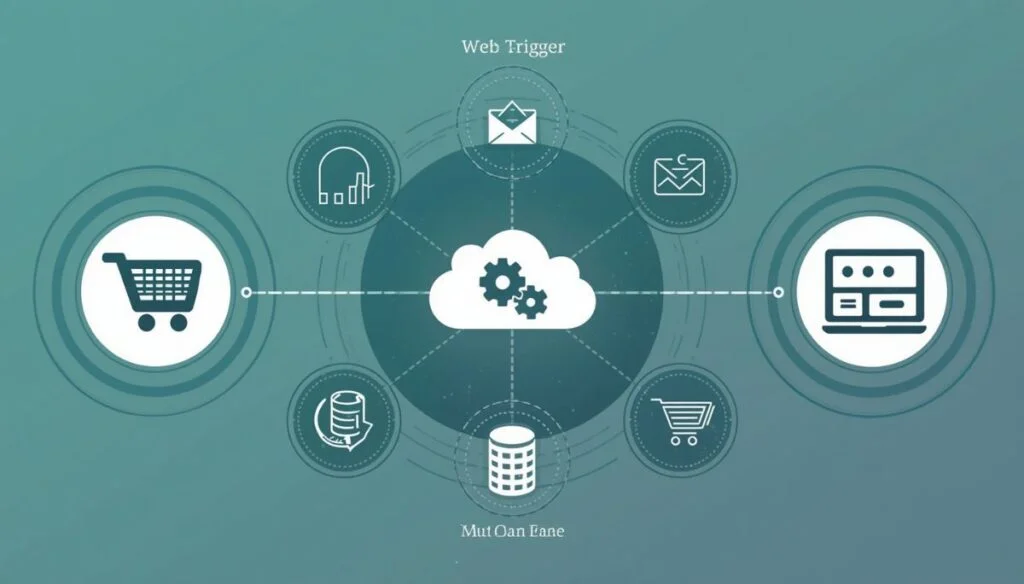
- At its core, process workflow automation is the strategic removal of human intervention from repetitive, rule-
- based digital sequences. It involves mapping operational tasks and connecting them through cloud
- middleware or dedicated platforms to execute operations instantly when specific conditions are met. Rather
- than relying on staff to remember steps, the system handles the sequence automatically.
- This structural approach relies on programmatic conditional logic, defined by simple foundational formulas: If
- Event A occurs within system X, then systematically execute Action B inside system Y. Mathematically, we can
- conceptualize this operational state as a deterministic function:
- Where an input vector I (such as a fresh WooCommerce web checkout) instantly triggers a pre-defined multi-
- step output vector O (including immediate payment verification, cloud invoice generation, webhook notification
- updates, and customer CRM synchronization) with zero manual data entry.
- Strategic Note: Automation is not about replacing human strategic intelligence; it is about freeing your
- talented human capital from repetitive data-entry loops so they can focus on conversion optimization,
- business development, and core creative work.
The Core Pillars of Modern Workflow Orchestration
To successfully automate business processes across your digital ecosystem, you need to understand the fundamental mechanics of data flow. Modern workflow orchestration does not rely on simple manual updates; instead, it utilizes structured cloud infrastructure to sync data between platforms seamlessly. If you want to deploy high-performance business automation software, your integration system must be built upon three core operational pillars:
- The Trigger Mechanism: This is the foundational event that instantly initializes your sequence. For instance, when an e-commerce customer completes a web checkout or a user submits a new form on your site, the trigger captures that event web-data immediately to kickstart the automated cycle.
- Data Mapping & Integration: This pillar handles the smooth transfer of dynamic variables between apps. The system securely pulls information like the customer’s name, email address, or payment total from the primary platform and cleanly maps it into target fields inside your subsequent business applications without human data entry.
- Conditional Branching Logic: Advanced process workflow automation requires smart multi-path evaluation filters. This logic dynamically routes tasks based on pre-set parameters. For example, if a client’s transaction value exceeds a specific premium tier, the system automatically alerts an account manager; otherwise, it executes standard processing paths.
Why You Must Automate Business Processes Today
The core motivation for implementing automation extends far beyond simple convenience; it directly influences
your operational scale and financial bottom line. Operating manually limits your daily transaction capacity.
Automated ecosystems, conversely, can scale infinitely to handle sudden spikes in volume without requiring a
corresponding increase in head count.
1. Drastic Reduction in Human Error
- Manual data entry is inherently prone to occasional errors. A simple typo in a client email address, an
- incorrect digit in an invoice total, or an overlooked fulfillment ticket can directly harm user experience.
- Software systems execute identical instructions precisely every time, ensuring absolute consistency across
- your business operations.
2. Unlocked Scalability
- If processing a client onboarding ticket requires 30 minutes of manual setup, managing 100 new clients
- concurrently becomes an operational bottleneck. Automating these structural pipelines allows your business
- to scale volume infinitely. The operational cost of processing 1,000 automated transactions is virtually identical
- to processing a single instance.
3. Massive Strategic Cost Reductions
- By migrating repetitive administrative routines over to robust automated platforms, agencies can optimize their
- personnel expenses. Teams can shift away from clerical maintenance and reallocate their hours toward
- scaling marketing hubs, executing high-value SEO audits, and building productized web assets
Essential Classes of Business Automation Software

Building an effective automated framework requires selecting compatible software components. The modern
enterprise technology stack relies on distinct software layers to bridge isolated applications and orchestrate
complex workflows.
1. Cloud Integration Middleware (The Backbone)
- Middleware platforms serve as central connection hubs, linking disparate cloud applications together. They
- listen for active webhooks across your product ecosystem, extract payload data, and translate information
- between different APIs. This structural layer allows independent tools like WooCommerce, Google
- Workspace, CRM engines, and communication channels to synchronize data smoothly in real-time.
2. Customer Relationship Management (CRM) Automation Engines
- Modern CRM systems act as more than static contact directories. Advanced platforms can score incoming
- pipeline leads, monitor user behavior across web landing pages, track email interactions, and systematically
- transition client statuses through your conversion pipelines without manual intervention.
3. Marketing & E-commerce Operations Suites

- E-commerce workflows require deep integration to maintain operational efficiency. This layer handles
- abandoned cart recovery automations, tracks dynamic inventory balances across multiple channels, updates
- accounting ledger logs, and delivers post-purchase follow-up sequences based on customer buying habits.
Step-by-Step Blueprint to Automate Business Processes
Successfully transitioning to automated workflows requires structured planning. Ad-hoc setups without clear
architecture can result in redundant loops or disconnected data. Follow this step-by-step implementation
framework to build clean, error-free operations.
Step 1: Map Out the Complete Manual Workflow
- Before writing automation rules or configuring APIs, map out every step of your manual operational sequence.
- Document every app used, every document opened, and where data is manually entered. Identifying existing
- bottlenecks allows you to design a cleaner automated path.
Step 2: Define Clear Triggers, Actions, and Variable Mapping
- Isolate the specific event that should initialize your workflow. Once defined, select the exact subsequent
- actions the system must perform. Ensure that dynamic fields—such as customer names, email addresses,
- and purchase IDs—map cleanly into target fields across all connected applications.
Step 3: Build Robust Error-Handling Routines
- Even well-configured integrations can occasionally encounter errors due to network timeouts or invalid user
- inputs. Implement fallback error-handling rules within your middleware. Configure your system to log
- exceptions and alert an administrator if an integration step fails, keeping your operational data secure.
High-Value Automation Architecture for Modern Digital Agencies

Digital marketing agencies and web consultancies can leverage white-label platforms and automation to
manage client workloads efficiently. Transitioning toward automated operational models helps agencies build
predictable, recurring revenue streams.
Automating Client Onboarding Operations
When a new client signs a contract or processes a payment, an automated sequence can instantly execute
the following administrative steps:
- Generate a dedicated client folder inside your secure cloud storage directory.
- Dynamically generate and deliver a customized welcome onboarding questionnaire.
- Create a dedicated communication space inside your team messaging platform.
- Provision a custom client tracking portal with pre-configured operational dashboards.
Automating these administrative tasks ensures your clients receive an instant, professional onboarding
experience while freeing your team to focus directly on project delivery.
Conclusion: Future-Proofing Your Business Operations

Implementing business automation software is a foundational strategy for long-term scalability. By
establishing structured cloud orchestration, you protect your business against operational friction, minimize
administrative overhead, and build an asset capable of handling continuous growth.
Begin by identifying a single, high-frequency manual bottleneck within your business—such as lead routing or
customer invoicing. Map out its variables, configure a reliable automated workflow, include appropriate error
checks, and test the integration thoroughly. Once that baseline workflow runs consistently, expand automation
across your marketing, fulfillment, and client onboarding systems to build a fully optimized, high-efficiency
business.
Frequently Asked Questions (FAQs)
Question: What is the most reliable business automation software for beginners?
Answer: For businesses starting with process automation, cloud integration middleware like Zapier or Make (formerly Integromat) serves as the most reliable foundation. These platforms connect your existing tech stack—such as WooCommerce, CRM engines, and Google Workspace—without requiring complex API coding or specialized developer support.
Question: How does process workflow automation improve modern digital agency operations?
Answer: Workflow automation transforms digital agencies by streamlining client onboarding, tracking task updates, and managing recurring monthly billing seamlessly. Automating these repetitive administrative pipelines saves manual labor hours, allowing your operational team to focus completely on core marketing tasks, strategic client growth, and SEO data analysis.
Question: Can implementing business process automation software reduce enterprise operational costs?
Answer: Yes, implementing dedicated automation platforms significantly lowers administrative and overhead expenses. By removing human touchpoints from high-frequency routines like manual data-entry logs, invoice synchronization, and lead routing, enterprises drastically reduce clerical errors and optimize resource allocation.
Question: Is a custom CRM engine necessary to automate business processes successfully?
Answer: While a dedicated CRM automation suite simplifies contact tracking and client lifecycle pipelines, it is not an absolute requirement. Modern automation tools can sync data across standard cloud databases, email marketing applications, and custom web forms to manage operations efficiently without an enterprise-level CRM.
Question: How do you ensure error handling when you automate business processes?
Answer: To maintain data integrity across automated pipelines, you should always build robust error-handling routines within your cloud middleware or automation platforms. This includes setting up automated retry attempts for failed webhooks, implementing internal validation checks for dynamic data mapping, and configuring immediate system notifications (such as automated email alerts or team channel messages) to alert your technical administrator if a workflow step encounters an unexpected timeout or processing error.