
The digital landscape is evolving at a breakneck pace, and there has never been a more crucial time to master online business strategies. Whether you want to scale a proprietary business, launch a high-traffic WordPress blog, build an electronics eCommerce empire, or secure a high-paying freelance career, it all starts with the right skill set. If you are looking to study digital marketing online, you have arrived at the perfect place.
Gone are the days when you needed a traditional, expensive university degree to understand market dynamics. Today, the internet is flooded with accessible, high-quality resources, ranging from free online digital marketing courses with certificates to intensive, premium bootcamps.
This comprehensive guide will break down exactly how you can study digital marketing online, step-by-step. We will cover the core modules you must master, the best platforms for certifications, and how to transition from a beginner to an in-demand marketing professional.
Why You Should Study Digital Marketing Online Today
Before diving into the “how,” it is important to understand the “why.” Digital marketing is not just a trend; it is the backbone of modern commerce.
1. High Demand and Incredible Career Growth
Every business, from a local bakery to a global tech giant, requires an online presence. By learning digital marketing, you position yourself in an industry with a massive skills gap. Companies are actively searching for experts who can drive traffic, generate leads, and increase return on investment (ROI).
2. Location Independence and Freelancing
One of the most attractive aspects of mastering digital marketing is the freedom it provides. Once you build a strong portfolio, you can easily offer your services as a freelancer on platforms like Upwork, managing global clients from anywhere in the world.
3. Creating Multiple Streams of Passive Income
Digital marketing empowers you to build your own digital assets. By mastering Search Engine Optimization (SEO) and content creation, you can launch profitable blogs, sell high-value e-books, or manage successful dropshipping and eCommerce stores without relying heavily on expensive physical infrastructure.
Core Modules: What Exactly Will You Learn?
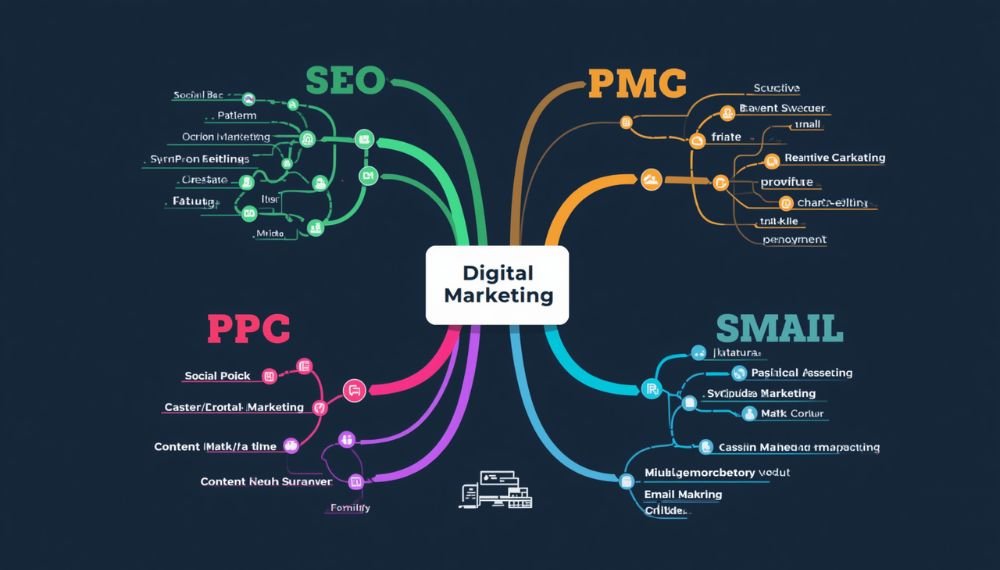
Digital marketing is a broad umbrella term that encompasses several specialized disciplines. When you study digital marketing online, you should aim to build a “T-shaped” skill set—meaning you have a broad understanding of all areas, but deep expertise in one or two specific niches.
Search Engine Optimization (SEO)
SEO is the art and science of ranking web pages high on search engines like Google without paying for placement. You will learn about keyword research, on-page optimization (like perfectly tuning your meta titles and descriptions), technical SEO (site speed and indexability), and off-page SEO (building high-authority backlinks). Mastering SEO is the most sustainable way to drive long-term, free organic traffic to any website.
Pay-Per-Click Advertising (PPC) and Google Ads
If you want instant traffic, PPC is the answer. This module teaches you how to create highly targeted ad campaigns on Google, YouTube, and partner networks. You will learn how to bid on commercial keywords, optimize cost-per-click (CPC), write compelling ad copy, and maximize conversions. Because PPC involves direct financial investment, experts in this field are highly compensated.
Social Media Marketing (SMM)
Social media is where the audience lives. Social media marketing certificate programs will teach you how to build brand awareness and drive engagement across platforms like Instagram, LinkedIn, Facebook, and X (formerly Twitter). You will learn both organic growth strategies and paid social advertising (like Meta Ads).
Content Marketing & Copywriting
Content is the fuel for all your digital campaigns. This involves creating valuable, relevant, and consistent content—such as blog posts, videos, and professional e-books—to attract and retain a clearly defined audience. Copywriting goes hand-in-hand with this, teaching you the psychology of writing words that persuade people to take action, whether that is signing up for a newsletter or buying a product.
Email Marketing & Automation
Despite the rise of social media, email remains one of the highest-converting marketing channels. You will learn how to capture leads, segment audiences, and set up automated drip campaigns that nurture prospects into loyal customers.
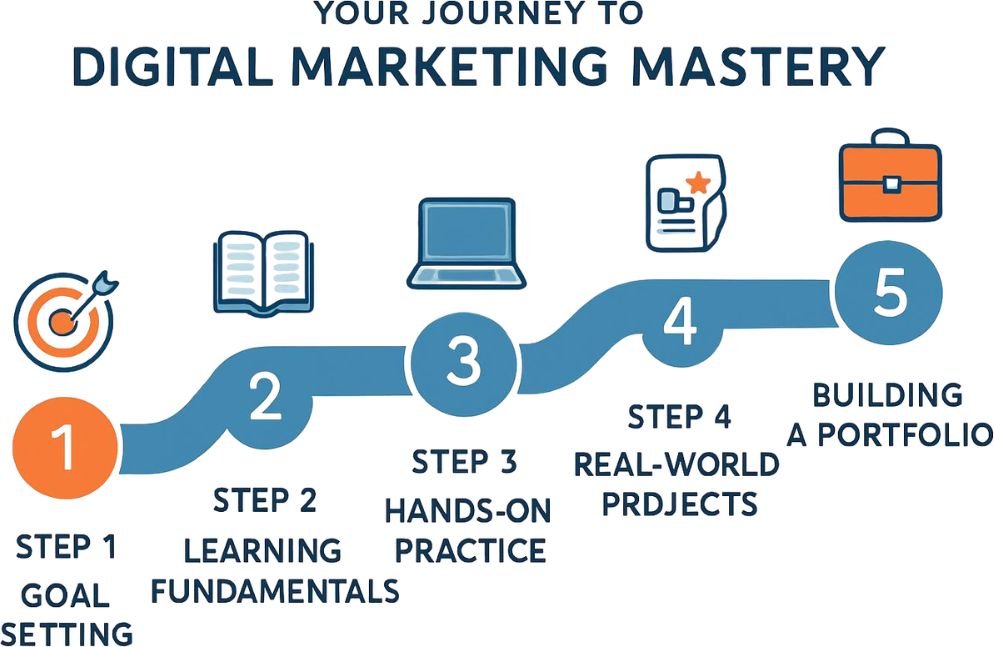
Step-by-Step Blueprint to Study Digital Marketing Online
It is easy to get overwhelmed by the sheer volume of information available. Follow this structured, step-by-step blueprint to ensure you stay focused and actually retain what you learn.
Step 1: Define Your Goals and Pick a Primary Focus
Do not try to learn everything at once. Decide what your immediate goal is. Do you want to become a specialized WordPress SEO expert? Do you want to run paid ads for eCommerce stores selling electronics and gadgets? Defining your end goal will dictate which courses you should prioritize.
Step 2: Start with Free Fundamentals
Before spending money, take advantage of high-quality free resources to build your foundational knowledge.
- Google Digital Garage: Start with the “Fundamentals of Digital Marketing” course. It is completely free, beginner-friendly, and includes a recognized certification upon completion.
- HubSpot Academy: The HubSpot digital marketing course ecosystem is incredible for learning inbound marketing, content strategy, and email automation. Their certifications are highly respected in the corporate world.
Step 3: Invest in Specialized Premium Courses
Once you understand the basics, it is time to dive deep. Look for comprehensive online marketing courses for beginners that transition into advanced strategies. Platforms like Coursera and Udemy offer fantastic deep dives. For example, a Coursera digital marketing course often involves partnerships with top universities or companies like Google and Meta, providing rigorous, structured learning and peer-reviewed assignments.
Step 4: Build a Practice Project (Crucial Step)
You cannot learn digital marketing purely through theory; you must execute.
- Start a Blog: Purchase a domain, set up WordPress, and start writing SEO-optimized articles. Use tools like Google Search Console to monitor your indexing and traffic.
- Launch an eCommerce Store: Set up a small proprietary store, integrate a payment gateway, and try running a small budget Facebook ad campaign to drive traffic. The data and experience you gain from your own projects are worth more than any certificate.
Step 5: Master Analytics and Data Tracking
Marketing without data is just guessing. You must learn how to use Google Analytics 4 (GA4) and Google Tag Manager. Understand how to track user behavior, monitor bounce rates, and calculate the conversion rate of your campaigns. Data analysis allows you to optimize your strategies and prove your ROI to future clients or employers.
Best Platforms to Get Your Digital Marketing Certification
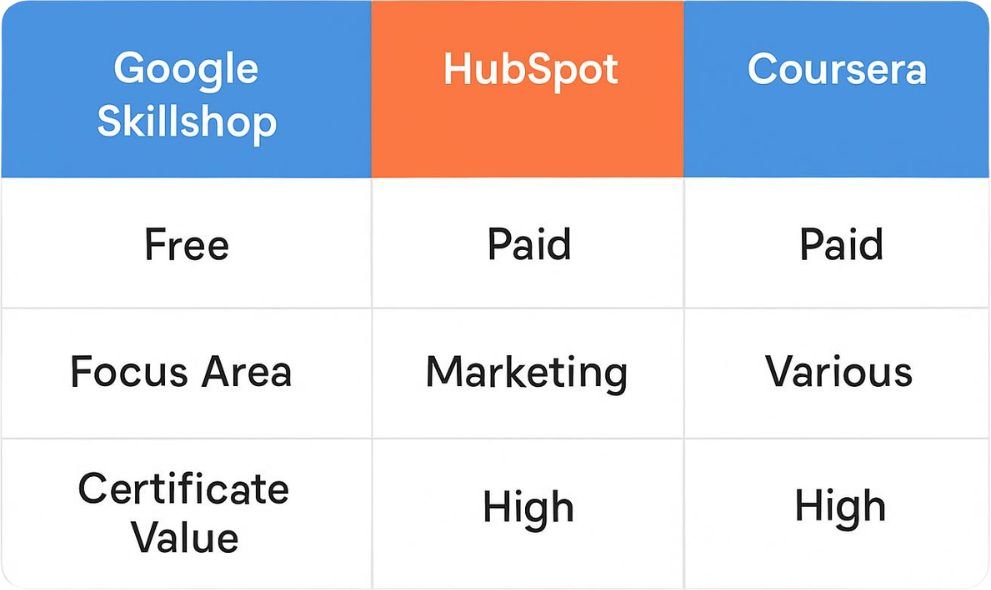
To boost your resume and LinkedIn profile, acquiring recognized certifications is highly recommended. Here are the top platforms to consider in 2026:
1. Google Skillshop
For anything related to search engine marketing, Google’s own academy is the gold standard. You can earn certifications in Google Search Ads, Display Ads, Video Ads, and Google Analytics. Since these tools are industry standard, these certifications are mandatory for aspiring PPC specialists.
2. HubSpot Academy
As mentioned earlier, HubSpot is the king of inbound marketing. Their “Content Marketing Certification” and “Social Media Marketing Certification” are exceptionally detailed, entirely free, and widely recognized by agencies worldwide.
3. Coursera & CareerFoundry
If you are looking for structured, university-level education or intensive bootcamps, these platforms are ideal. A CareerFoundry digital marketing short course offers mentorship and portfolio reviews, making it an excellent choice for those who need guided, hands-on feedback.
4. Semrush Academy
For aspiring SEO specialists, Semrush offers outstanding courses on technical SEO, keyword research, and competitor analysis. Their courses are taught by industry experts and provide deep insights into using professional SEO software.
How to Turn Your Digital Marketing Skills into High-Income Careers
Learning the skills is only the first half of the journey. The ultimate goal is to monetize your knowledge. A well-optimized digital marketing blog can easily attract premium AdSense placements and high CPC advertising, but there are multiple other avenues for monetization.
Launching a Freelance Business
Create a robust profile on platforms like Upwork. Start by offering highly specific services, such as “On-Page SEO Optimization for WordPress” or “eCommerce Product Description Copywriting.” As you complete projects and gather five-star reviews, you can steadily increase your hourly rate. Ensure your profile accurately reflects your completed projects and business structure.
Building Niche Authority Blogs
Use your SEO and content marketing skills to build niche websites. By targeting low-competition, high-search-volume keywords (just like you are reading right now), you can drive significant organic traffic. You can monetize these blogs through Google AdSense, affiliate marketing (promoting software, hosting, or courses), and selling digital products like comprehensive e-books.
Scaling an eCommerce Brand
Digital marketing is the lifeblood of eCommerce. By applying advanced social media advertising and conversion rate optimization (CRO) techniques, you can effectively market physical products. Knowing exactly how to categorize products, write SEO-friendly product titles, and run retargeting ads will give you a massive edge over competitors who rely solely on marketplace algorithms.
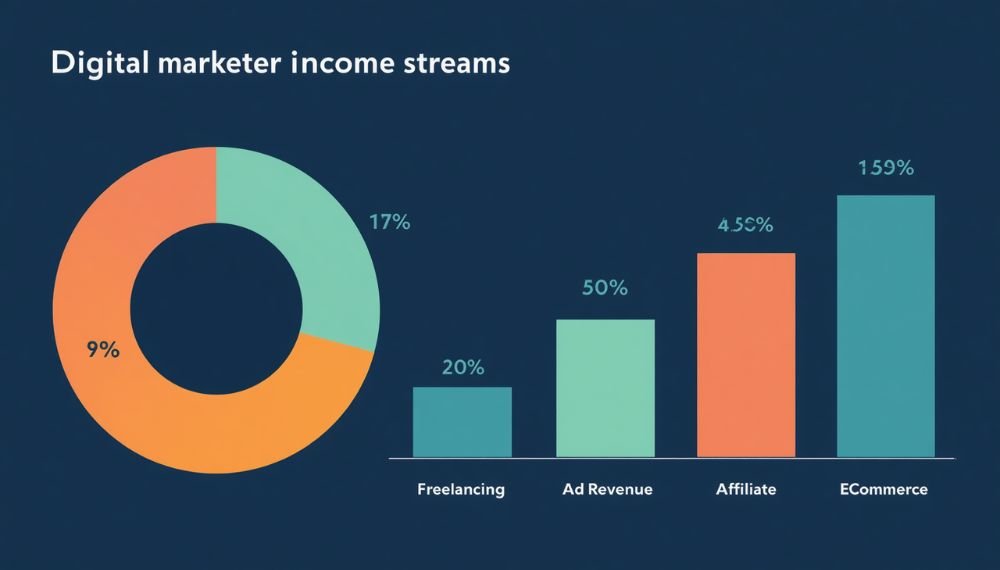
[Insert Canva Image 6: A professional pie chart or bar graph illustrating the different income streams a digital marketer can build: Freelancing, Ad Revenue, Affiliate Marketing, and eCommerce.]
Conclusion: Start Your Digital Journey Today
Choosing to study digital marketing online is one of the highest-ROI decisions you can make for your professional future. The industry is dynamic, challenging, and incredibly rewarding.
Remember, the key to success is not just consuming video lectures; it is active implementation. Start by taking a free Google Garage or HubSpot digital marketing course today. Immediately apply what you learn by writing a blog post, optimizing a webpage, or designing a social media graphic.
Stay consistent, keep testing new strategies, and always follow the data. The digital world is waiting for your unique voice and expertise—take that first step today and build the online business you have always envisioned.
Frequently Asked Questions (FAQs) About Studying Digital Marketing
Can I really learn digital marketing on my own for free?
Yes, absolutely! The internet is full of high-quality, free resources. You can start with recognized platforms like Google Digital Garage or HubSpot Academy to learn the fundamentals without spending a single rupee. However, while the theory is free, the real learning happens when you invest a small amount in a domain and hosting to build your own WordPress blog or a small eCommerce store to practice your skills live.
2. Do I need coding skills to become a digital marketer?
No, coding is not required for most digital marketing roles. Today, content management systems (CMS) like WordPress and visual design tools like Canva Pro make it incredibly easy to build websites, design professional graphics, and publish content without writing a single line of code. Your main focus will be on strategy, consumer psychology, data analysis, and SEO tools like Rank Math.
3. How long does it take to study digital marketing and get a job?
If you dedicate 2 to 3 hours a day, you can master the basic fundamentals and earn a few beginner certificates in 3 to 4 weeks. However, to build a strong portfolio and confidently manage client projects on platforms like Upwork, you should expect to spend 3 to 6 months actively implementing strategies on real-world projects, such as growing organic traffic or running ad campaigns.
4. Which digital marketing skill pays the highest in 2026?
While all skills are valuable, the highest-paying niches usually involve directly driving revenue for businesses. Pay-Per-Click (PPC) advertising, advanced Search Engine Optimization (SEO), and specialized eCommerce conversion rate optimization are highly lucrative. Freelancers who can prove they increase sales for electronics or digital product brands often command premium hourly rates.
5. Are digital marketing certificates actually worth it?
Yes, especially when you are just starting out. Certificates from Google Skillshop or Meta provide credibility to your resume and freelance profiles. They show potential clients and employers that you have a verified understanding of industry-standard tools. However, a certificate combined with a live portfolio (like a ranking blog or successful ad campaign) is the ultimate key to high-income success.